
Pennsylvania Court Records After Arrest
After a Pennsylvania jail arrest, the booking record and the court record serve different jobs. Booking is a custody event. It can show when a county jail received a person, what agency brought the person in, and whether there is a current local hold. The court record begins when charges are filed and the case is opened or docketed in the Pennsylvania court system. That docket can show charges, docket events, bail entries, court dates, warrants, pleas, trial activity, sentence entries, and later case action.
Users often search for "arrest records" when they really need court records after a jail arrest. The court record is usually the better source for the charge history because booking charges can change. A complaint may be amended. A charge can be withdrawn or dismissed. A later sentencing entry may explain whether the person moved from county jail to the Pennsylvania Department of Corrections. For custody and booking status, use Pennsylvania inmate records. For booking photos, use Pennsylvania jail rosters and mugshots.
The Unified Judicial System of Pennsylvania case search is the statewide starting point for public docket sheets after a Pennsylvania arrest.
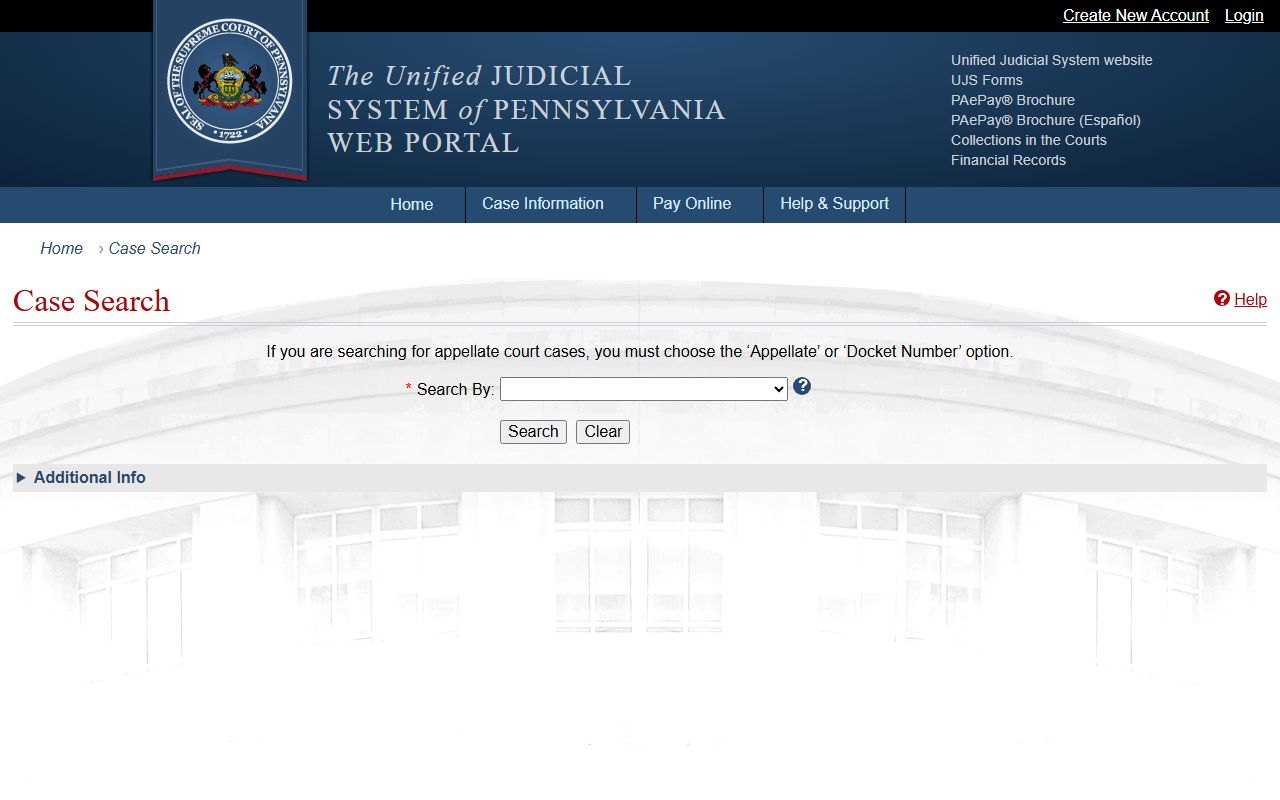
The court portal is a docket tool, so a matching case should still be checked against the county jail, DOC, VINE, BOP, or ICE source for present custody.
Pennsylvania Criminal Courts
Pennsylvania criminal records are handled through the statewide judiciary and local courts. The UJS case information source says public docket sheets are available for appellate courts, criminal courts of common pleas, magisterial district courts, and Philadelphia Municipal Court. That statewide structure is important because an arrest may begin in one local law-enforcement setting, move through a magisterial district judge for early proceedings, and then continue in a court of common pleas if the case is held for court or otherwise advances.
Philadelphia is structurally different because the city and county are coterminous and the Philadelphia Department of Prisons runs the local jail system. Even there, court records after an arrest are still searched as court records rather than as prison records. Across the state, the county where charges are filed controls much of the docket context. A docket in Erie, York, Allegheny, Lehigh, Dauphin, Luzerne, or Philadelphia may point to local custody, but it does not replace the jail or prison locator.
Find Court Records After Arrest
The UJS portal and PAeDocket tools support searches by case number, participant name, organization name, offense tracking number, police incident or complaint number, or state ID number. Name searches can return many results, so the county, date range, middle initial, date of birth clue, or docket number from a jail profile can help. If the case is not found, it may be too new, filed under a different spelling, sealed or restricted, handled in a court not covered by the visible record, or connected to federal or juvenile proceedings.
- Open the statewide UJS case search and choose the search type that matches the information available.
- Search by docket number, participant name, offense tracking number, or police complaint number if one appears on the jail or charging paperwork.
- Open the matching docket sheet and read the county, court type, charges, bail entries, event list, and next court date.
- Check the final charge status before treating a booking charge as the filed charge.
- Use the County Directory when the docket points back to a local jail or county office.
The Pennsylvania court web portal also points users to PAeDocket for mobile access to docket information. The Pennsylvania judiciary web portal is the broader access point for court searches and related services.
Charges Filed After Arrest
A jail arrest alone is not a conviction. The legal case depends on charging action and later court rulings. Pennsylvania research for this build supports a practical arrest-to-court workflow: arrest, booking, first appearance or preliminary proceedings, prosecutorial charging action, docket events, bail or detainer decisions, and disposition or sentencing. The exact document labels and procedure can depend on case type and court level, so the docket should be read for the specific charge entries.
| Record Type | What It Does | How to Read It |
|---|---|---|
| Complaint | Begins or supports the accusation in many criminal cases. | Check offense text, filing date, police incident number, and later amendments. |
| Information | Formal prosecutorial charging record after earlier proceedings in many cases. | Compare it to the original booking charge because counts can change. |
| Indictment | Charging record used in some serious or grand-jury contexts. | Read the docket for each count and any related sealed or restricted entries. |
The main point is charge status. A person can be booked on one label and later appear on the court docket with amended counts, reduced charges, dismissed counts, or sentencing entries that change custody authority.
Pennsylvania Charge Status
Charge status tells more than the first booking line. A pending count is still unresolved. A dismissed or withdrawn count may no longer be active. An amended count may replace earlier wording. A conviction reflects a plea or finding, not just an accusation. Court records after a jail arrest should be checked count by count because one charge can be disposed while another remains pending.
| Status | What It Means | Why It Matters |
|---|---|---|
| Pending | The case or count remains open. | Custody, bail, and court-date questions may still be active. |
| Amended or reduced | The charge text or grade changed after filing. | The booking record may no longer match the court record. |
| Dismissed or withdrawn | The count is no longer being pursued in that case posture. | Other counts, detainers, or cases can still affect custody. |
| Convicted or sentenced | A plea, verdict, or sentence entry has been entered. | The person may move from county custody to DOC if a state sentence applies. |
Bail and Holds After Arrest
Bail entries are part of many court records after a jail arrest, but they should not be read in isolation. A bail amount or release order may not free a person if there is a detainer, warrant, parole violation, federal hold, ICE process, or another county case. A court docket can show bail action while the jail roster shows whether the person remains physically held.
| Release Term | Plain Meaning |
|---|---|
| Cash bail | Release depends on payment or deposit under the court's order. |
| Surety bail | A bonding arrangement may be allowed if the court permits it. |
| Release on recognizance | The person is released on a promise to appear, subject to conditions. |
| Detainer or hold | Another authority or case may keep the person in custody even after local bail changes. |
The Pennsylvania VINE portal can help monitor custody or case-notification status after a bail or release event is expected.

VINE does not replace the docket, but it can alert registered users when a custody status changes.
Charges vs Convictions
One of the most common mistakes is treating a charge as proof of guilt. A charge is an accusation. A conviction follows a guilty plea, verdict, or other qualifying disposition. Pennsylvania court records after an arrest may display both, and the distinction affects employment screening, housing questions, sealing requests, sentencing, and custody searches. The safest reading is to check the docket disposition for each count.
| Charge | Conviction | |
|---|---|---|
| Stage | Accusation after arrest or filing | Final or qualifying case result |
| Proof | Not proof of guilt | Based on plea, verdict, or disposition |
| Custody effect | May affect bail or hold status | May create sentence, DOC transfer, probation, or parole consequences |
Sealed or Expunged Records
Some court records after an arrest may be sealed, restricted, or expunged under rules that depend on the case outcome and the court's order. The research does not support a one-size-fits-all Pennsylvania eligibility claim for every arrest, so a missing or limited docket should not be treated as proof that no arrest occurred. Juvenile matters, sealed records, protected victim information, medical or mental health records, active investigations, and records barred by other law may be withheld or redacted.
| Sealed or Restricted | Expunged | |
|---|---|---|
| Public view | Public access is limited by court rule or order. | The public record may be removed or treated as cleared under the order. |
| Agency access | Some government access may remain. | Access depends on the expungement order and governing law. |
| Search result | A docket may be hidden, partial, or redacted. | A public search may return no visible case record. |
Important: Court access limits are legal questions. Verify a sealed, restricted, or expunged record with the court that entered the order.
Sentencing and DOC Transfer
Sentencing entries are where court records after an arrest can connect to DOC custody. Pennsylvania sentencing is generally indeterminate for state-prison cases, with minimum and maximum terms. The Pennsylvania Parole Board explains that the minimum sentence date is a parole eligibility date, not a guaranteed release date, and that Pennsylvania inmates are not required to serve 85 percent of the maximum sentence to be released on parole. DOC calculates state sentence dates after commitment.
The Pennsylvania Parole Board parole process page explains minimum and maximum sentence dates and parole eligibility for state-prison cases.
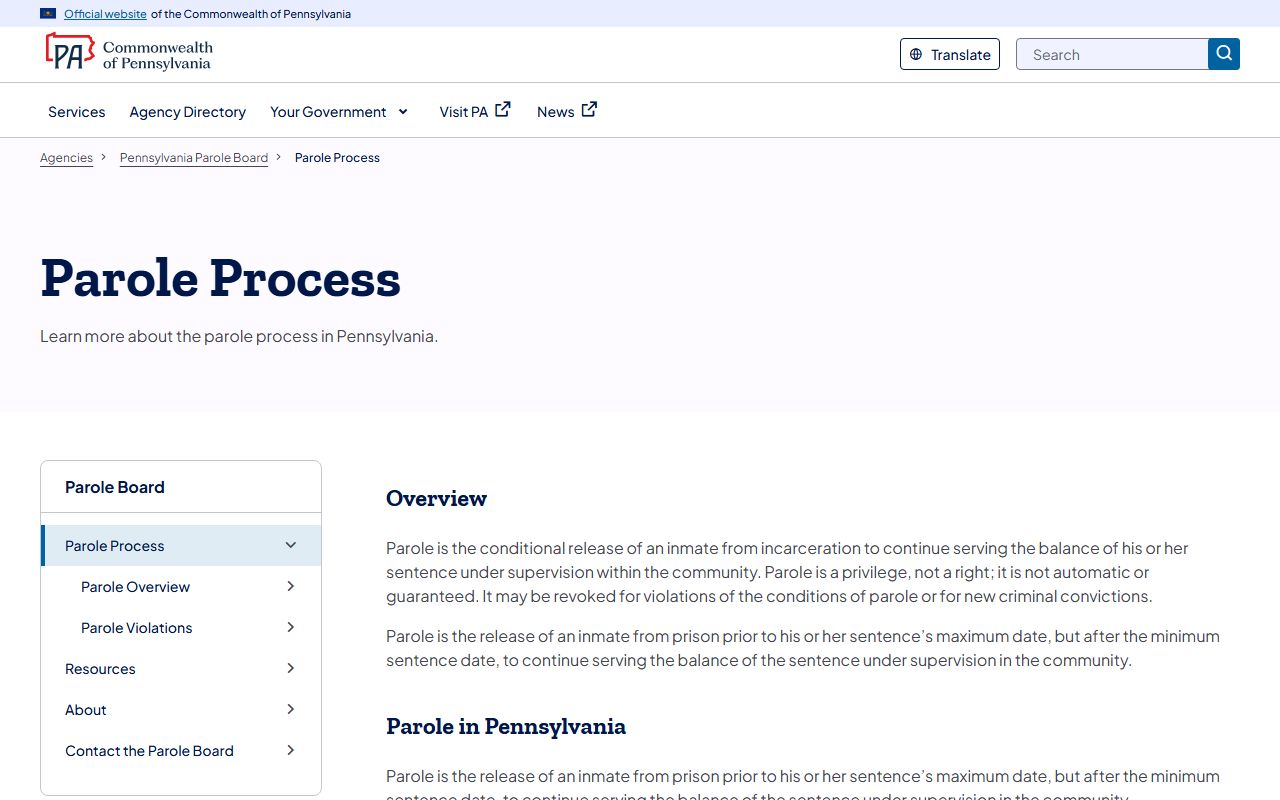
A sentenced person may disappear from a county roster after transfer and later appear in the DOC locator after intake and classification.
Federal and ICE Cases
Not every Pennsylvania arrest leads only to a Pennsylvania county or DOC record. Federal facilities in Pennsylvania include Allenwood, Lewisburg, Loretto, McKean, Schuylkill, FDC Philadelphia, and USP Canaan. Immigration detention may involve Moshannon Valley Processing Center, Clinton County Correctional Facility, or Pike County Correctional Facility when ICE custody is involved. Federal and immigration records are not Pennsylvania UJS court records, even if a county jail once held the person.
The BOP inmate locator is the correct public search route for federal inmates from 1982 to the present.
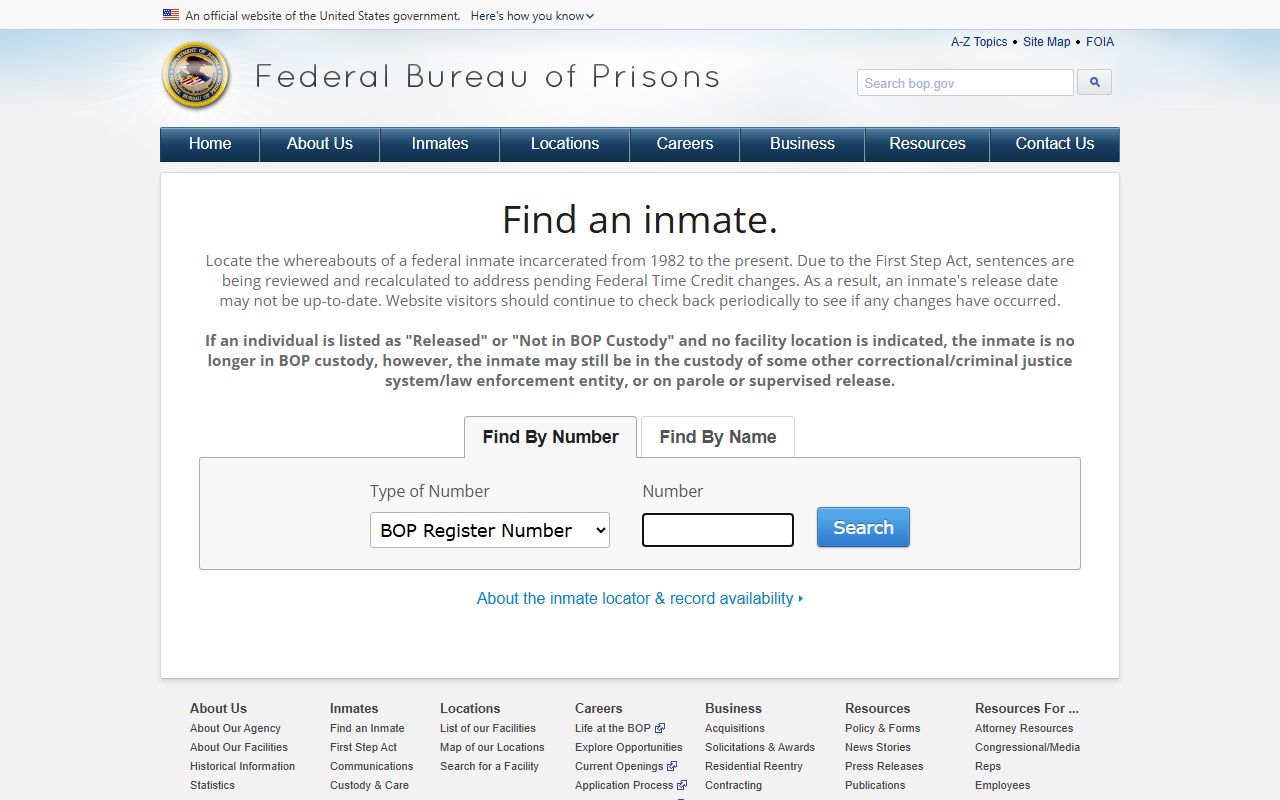
Use BOP or ICE sources when the court or jail record points away from Pennsylvania county or DOC custody.
Public-Records Limits
Pennsylvania's Right-to-Know Law presumes many state and local agency records public, but it also allows exemptions, privileges, court orders, and other laws to limit release. Court dockets, jail rosters, DOC records, investigative records, and federal records each have different request routes. Criminal investigative records may involve district attorney appeal officers. Federal BOP and ICE records use federal FOIA or privacy processes, not Pennsylvania RTKL.
The DOC Right-to-Know request service is the official Pennsylvania Department of Corrections route for DOC public-records requests.
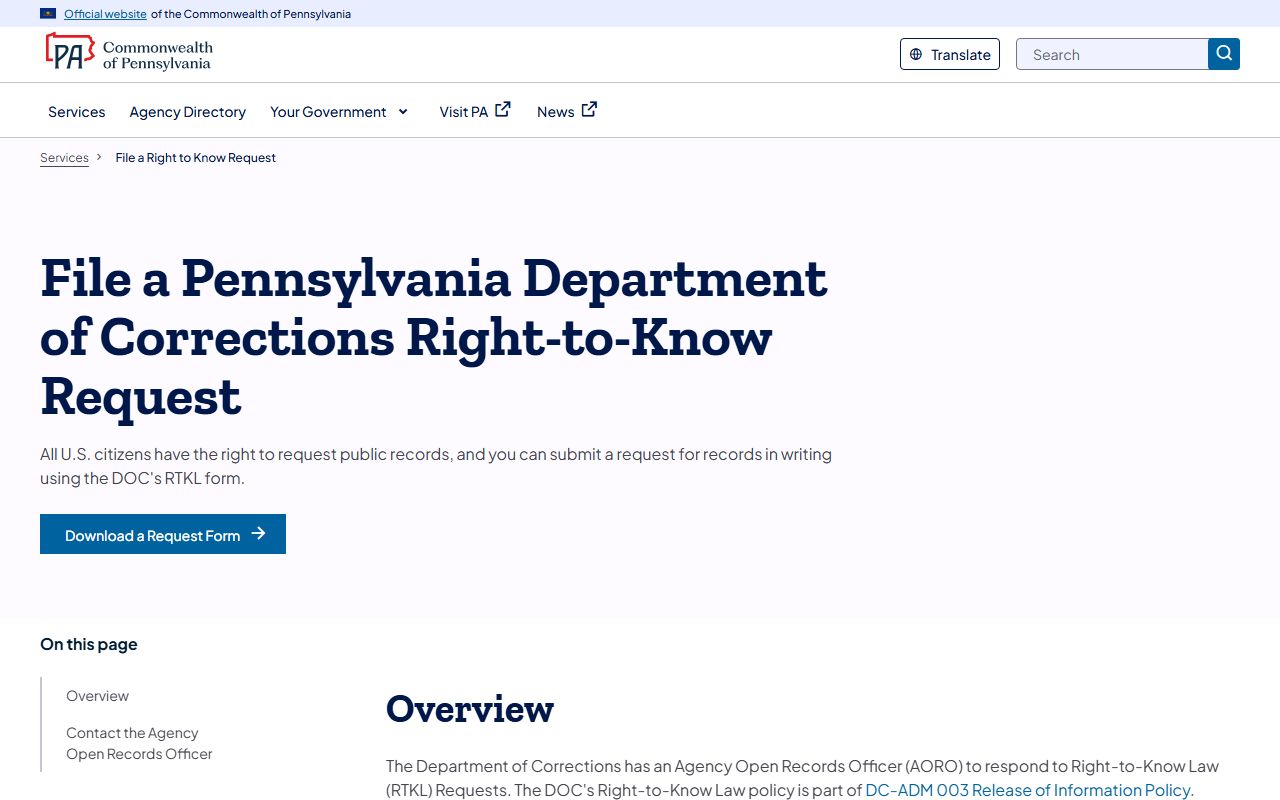
For county court files, start with UJS and the county court office rather than sending a blanket request to DOC.